
When the campus is gone: keeping postgraduate supervision visible under disruption in Gaza
What does postgraduate supervision need to look like when the usual structures of higher education have been severely disrupted?


EduExe blog
Author
What does postgraduate supervision need to look like when the usual structures of higher education have been severely disrupted?
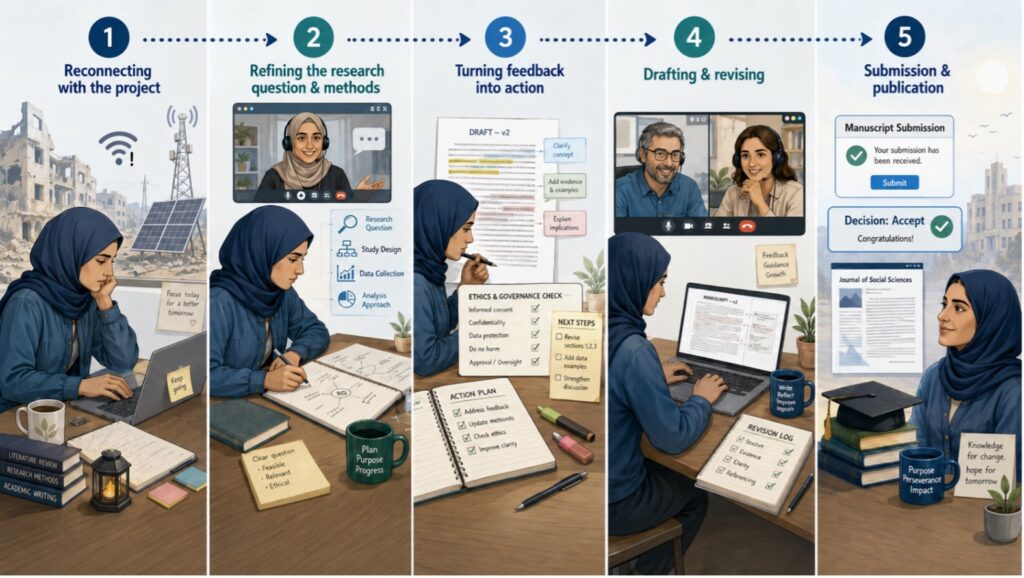
When students are studying through conflict and the collapse of ordinary university structures, academic progress can become fragile very quickly.

This blog post outlines how the BSc Biomedical Sciences program has embedded TrEF and integrated the United Nations Sustainable Development Goals (SDGs) into its curriculum.

How authentic work experience with Digital Estates is helping Geography students develop professional skills while contributing to the University’s digital transformation.
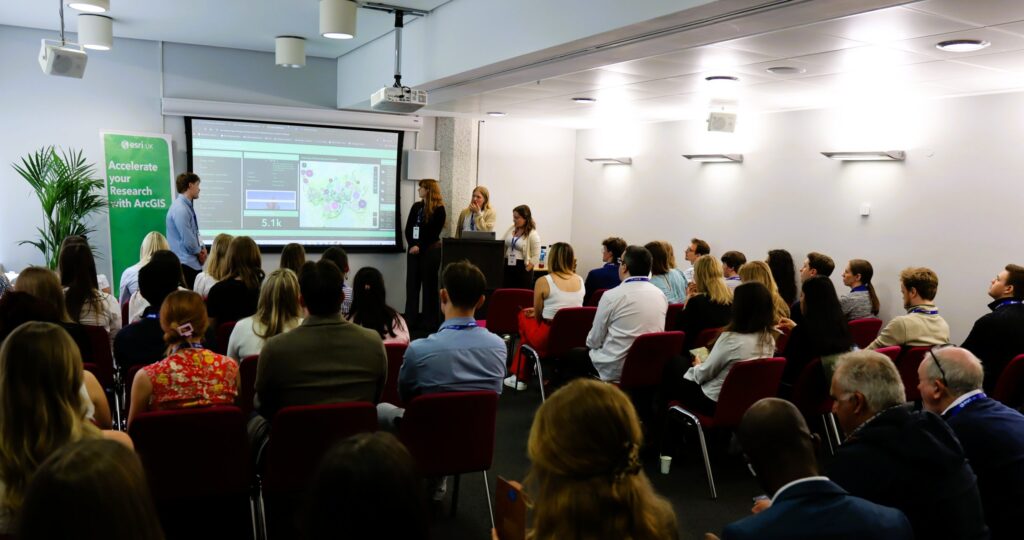
How a long-standing collaboration between the University of Exeter and Esri UK is using alumni to inform curriculum design, strengthen professional networks, and prepare students for an evolving geospatial profession.

Decolonising medicine starts in the classroom After completing the 'Decolonising Medicine' module, four fellow Medical Sciences students and I wanted to explore this topic further.
In this post, I reflect on how submitting my ASPIRE PRP fellowship application forced me to rethink the educator's role – arguing that true engagement emerges not from being the smartest person in the room, but from strategically stepping aside.

While the teaching of research methods is core to social science and cognate disciplines, pedagogic attention to research methods education has been conspicuously lacking.

How awareness of aphantasia shaped my approach to inclusive technical education When I was younger, I imagined a future in industrial design.

Drawing on academic debates and new teaching practices at Exeter, this article explores the potential employability benefits of engaging learners with transformative field-based teaching.

This post reflects on how two strands of published research on medicine safety were used to design scaffolded learning for safer prescribing.

In this blogpost we reflect on the current state of education in UK Higher Education Business Schools. We pose a series of radical questions, explain why they matter, and conclude with a challenge.
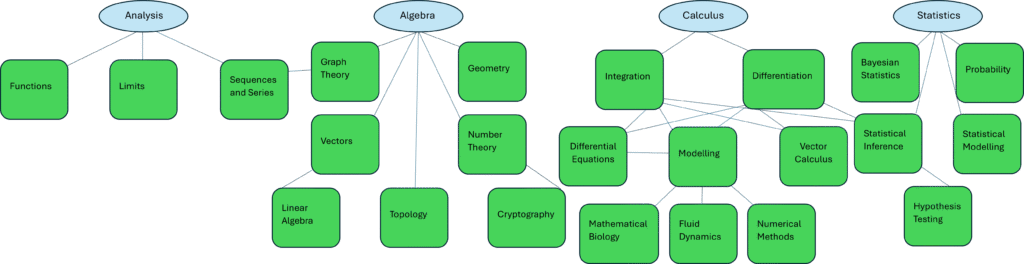
In this post, Rhianna Sookhy and Luke Garner reflect on the hidden structure of Mathematics Education. By analysing prerequisite knowledge structures within a mathematics degree, and exploring the extent to which these structures are made transparent to both students and educators, they identify the importance...

At the University of Exeter, the Education Incubator supports innovative ideas that have the potential to transform teaching and learning.

For today's students, opportunities to develop key skills for life beyond graduation are integral to their university experience.

The launch of ChatGPT in 2022 was a watershed moment for HE, with Generative AI tools producing text that looks human-authored whilst mimicking the demonstration of knowledge, independent research, evidence gathering and argument building that are fundamental to our learning outcomes.
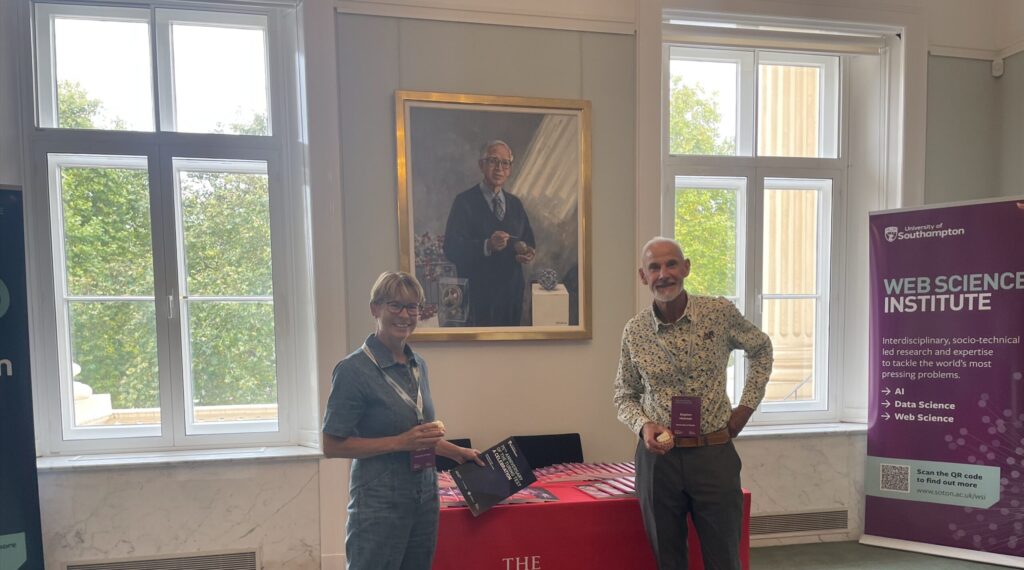
Seventy-five years after Alan Turing asked if machines could think, Stephen Hickman and Lisa Harris attended a remarkable event at the Royal Society where a new generation gathered to examine how imagination, ethics, and vigilance must guide AI’s next chapter.

A student-led mentoring initiative is bridging a crucial gap in placement preparation by pairing students who have successfully completed their placements with those just beginning the process, offering insider insights, guidance, and confidence-building support.

Your students are likely already using AI (Artificial Intelligence), with recent research indicating a 26% rise in usage from 2024-25.

How can we ensure that, as educators, we are teaching students locally but preparing them to think and act globally?

The Exeter Skills Framework challenges us to surface the skills required to achieve on our programmes, as well as presenting an opportunity to develop a curriculum that marries disciplinary rigour with the development of transferrable skills designed to launch students into wide-ranging futures.

A transformative project for equitable climate leadership, Breaking Barriers: Climate Leadership & You centres the voices and leadership of Global Majority and under-represented communities.

Reflection is an essential skill, yet shallow or uncritical engagement can compromise its purpose and usefulness. This blog explores a clearer, process-focused model of reflective practice to support meaningful and inclusive learning.

Letters from a reflexive lecturer: addressing mistakes and creating inclusion in the classroom Dr Kate Goldie Townsend is a lecturer specialising in applied normative Political Philosophy, particularly concerning the body and children’s rights.

Student-Led Peer Facilitation for Inclusive Group Work: How second-year students are transforming political discussions for first-years at the University of Exeter’s Cornwall campus In an age of increasing political polarisation and digital group thinking, how can universities help students learn to communicate across divides?

In the final instalment of this series on teaching at scale, we explore effective approaches to leading and coordinating a teaching team.

In part 7 of this series on teaching at scale the focus is on student support. When 500+ students are relying on you, student support needs to be proactive, streamlined, and scalable.

Part 6 of our series on teaching at scale explores the topic of assessment. With 500+ students, your assessment plan has to work for everyone, from students and staff to systems and schedules.

In part 5 of this series of posts, Dr Cliff Li and the Team from the University of Exeter Business School have some tips to help us to address issues of diversity and challenge.

We know that student belonging doesn’t scale automatically, especially in a module of 500+. In this post, the fourth in a series from colleagues at the University of Exeter Business School on teaching large modules, we discuss how using pro-social learning approaches can create belonging...
Most STEM programmes require high standards of proficiency in maths at undergraduate level and failure to meet sufficiently high grades in maths is a key reason for students not achieving an undergraduate place.

In part three of our guidance around teaching large cohorts, the team from the University of Exeter Business School are discussing flipped learning.
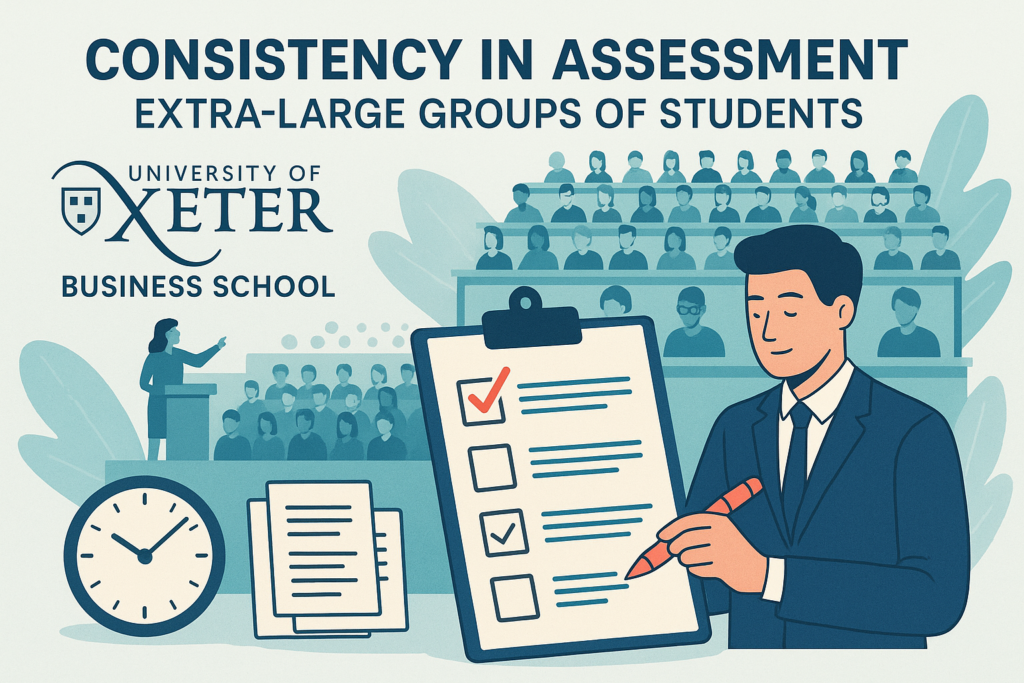
In the second of our blog series on leading extra large modules, the team from the University of Exeter Business School are concentrating on consistency in assessment.

When your module enrols 500+ students, clarity, consistency and creativity in design are essential. Here’s how to plan with confidence.

How can we ensure that different standpoints, particularly those often silenced and neglected, are included and that students play an active role in making their experience of learning truly memorable and transformative?
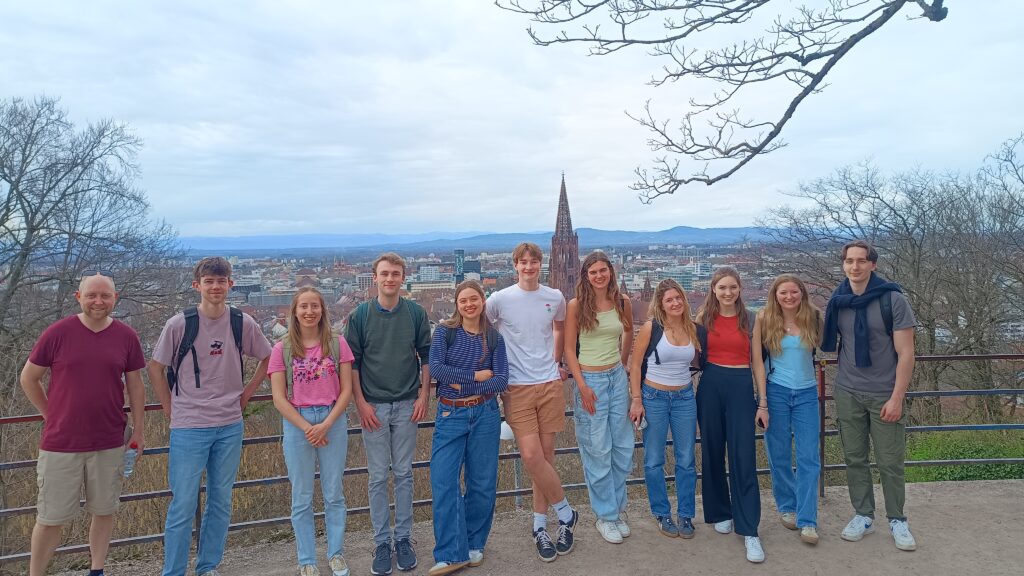
Field courses provide important and potentially transformational learning opportunities across a range of disciplines. Yet, a wealth of literature spanning several decades highlights the significant complexities and barriers of this area of pedagogy in relation to Equality, Diversity and Inclusion (EDI).

Where is shared decision-making in the medical school curriculum? What was the problem?

In higher education there is a growing trend in to incorporate the United Nations Sustainable Development Goals (SDG) into undergraduate education.

As concerns about student use of AI in assessments grow, a knee-jerk reaction to increase in person exams may lead to unsustainable practices.

Educators, researchers, postgraduate students from across disciplines came together in December 2024 for a workshop organised by the Exeter Centre of Mathematical Sciences (ExCMS) and led by Dr Houry Melkonian (Mathematics & Statistics) to explore boundary connections for interdisciplinary interactions.

Artificial Intelligence (AI) is transforming education at an unprecedented pace, yet its role in higher education remains a subject of debate.
Choose which optional services may run. Necessary cookies used to make the website work are not affected.
Allows analytics tools to measure how the website is used.
Allows content from third-party services such as YouTube to load.