

From Invisible Barrier to Inclusive Design: How Personal Experience Has Shaped My Approach to Technical Education
How awareness of aphantasia shaped my approach to inclusive technical education When I was younger, I imagined a future in industrial design.
How awareness of aphantasia shaped my approach to inclusive technical education
When I was younger, I imagined a future in industrial design. I was fascinated by the idea of designing objects that shaped how people interacted with the world. That interest led me to study Design and Technology, where I was particularly drawn to computer-aided design (CAD), which allowed me to test colours, materials, and forms in a concrete, visual way.
What I did not understand at the time was why I depended so heavily on those CAD tools. I was often encouraged to use my “mind’s eye” to imagine how a design might look before modelling it. For many of my peers, that seemed natural. For me, it was not. I could not clearly picture alternative colours, finishes, or forms in my head, so to explore ideas, I had to externalise them and model each variation in CAD.

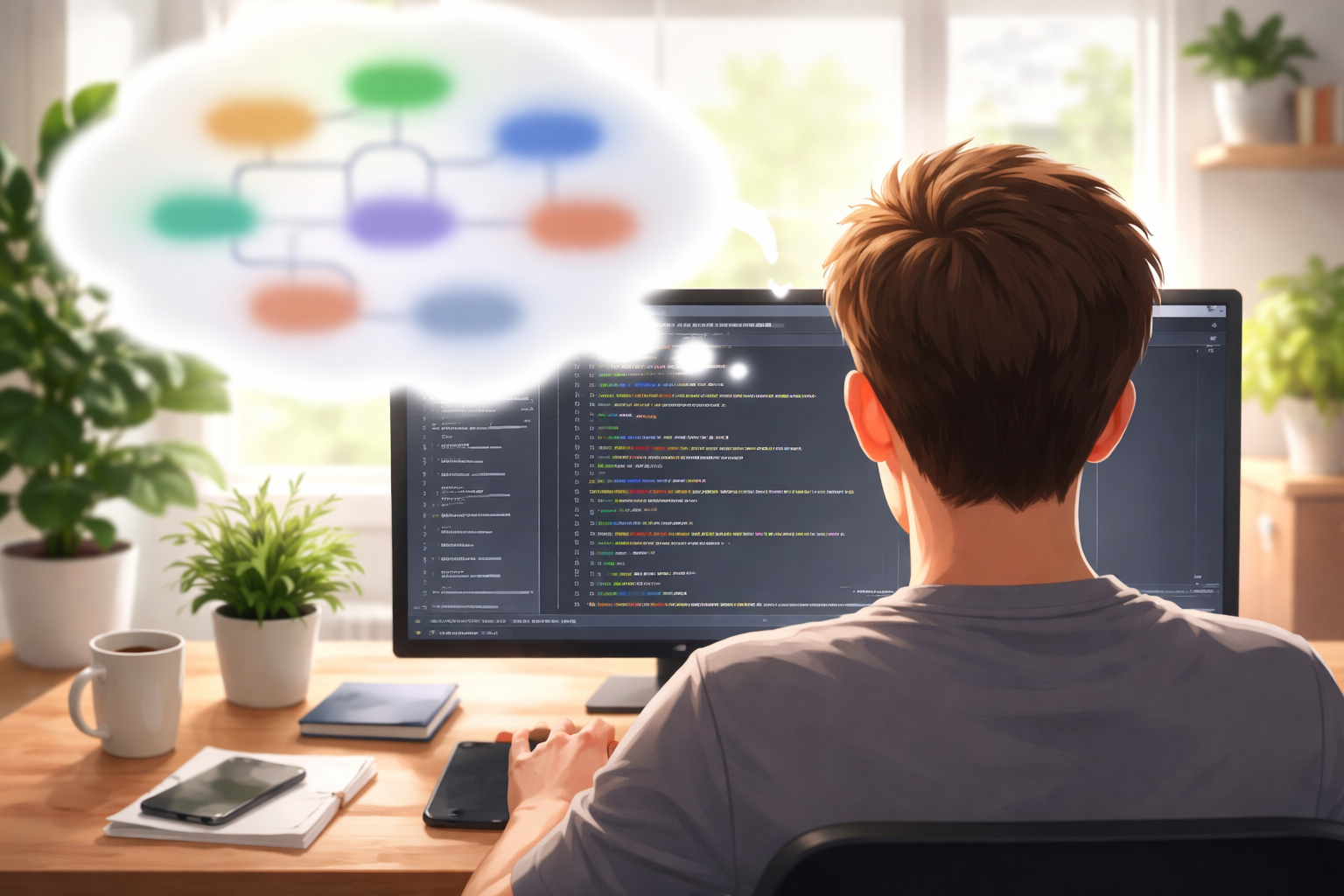
Image 1: CAD as a tool for externalising design exploration, enabling me to test variations that I could not readily visualise mentally.
At the time, I had no language for this and simply experienced it as a personal difficulty. Only much later did I understand it as part of a wider cognitive difference associated with aphantasia: an inability or reduced ability to form mental images voluntarily [1].
Image 2: A representation of my mind’s eye, illustrating the faint and indistinct nature of my internal visualisation.
That experience changed the direction of my studies. It made me realise that industrial design often depended on forms of cognition that did not come naturally to me, and I found myself drawn instead towards computing. What appealed to me was not only the technical side of the subject, but the way it rewarded structured reasoning, logic, and abstraction. It felt better aligned with how I processed the world.
Discovering the limits of “intuitive” teaching
When I began studying Computer Science at university, I encountered a similar issue in a different form. Programming concepts were often taught through visual metaphors and analogies. These approaches were useful for many students, but they often assumed a way of understanding that was not available to me.
I could grasp the underlying logic, but not through the visual route that teaching sometimes relied on. As a result, I developed alternative strategies. I translated ideas into rules, sequences, and structured verbal explanations. Rather than picturing a process, I broke it down step by step.
Over time, this became foundational to how I think about learning and teaching. It made me realise that what feels intuitive to one learner may be inaccessible to another, and that barriers are not always visible. A learner can appear to be coping while quietly working around assumptions built into the teaching itself.
Why this led me to Universal Design for Learning
Later, while teaching technical material myself, I became increasingly aware of how differently learners make sense of complex ideas. Some students benefited greatly from diagrams and metaphors. Others needed repetition, structured explanation, or opportunities to test understanding in practice. The more I taught, the more convinced I became that good teaching should never rely on a single route to understanding.
When I formally encountered Universal Design for Learning (UDL) [2], I immediately recognised it as a framework for ideas I had already been developing through experience. UDL emphasises the importance of offering multiple means of engagement, representation, and action and expression. For me, that was a significant shift. It reframed accessibility as a design responsibility rather than a reactive adjustment. Just as good product design anticipates different users, good educational design should anticipate different learners.
Turning personal insight into programme-level change
These principles now underpin my work within the Coding for Reproducible Research (CfRR) programme [3]. In 2024, we reviewed the programme’s course portfolio, spanning 28 courses across 311 web pages, and identified recurring issues in community-developed technical materials, including inconsistent learning outcomes, uneven accessibility, unclear assumptions about prior knowledge, and structures that were not always welcoming to beginners.
Guided by UDL, I helped lead a more systematic programme of reform that continues to shape our approach today. Here are some practical takeaways for educators:
- Use Universal Design for Learning (UDL) as a guiding structure – build courses with flexibility in mind from the start, rather than retrofitting accessibility later.
- Improve clarity through intentional course design – add clear signposting and structured explanations so learners always know what to do and why it matters.
- Embed regular low-stakes assessment – use quizzes and formative activities throughout to reinforce learning and provide ongoing feedback.
- Scaffold for diverse learner needs – design support for varying confidence levels and prior experience, not just content, but how learners engage with it.
- Think beyond individual resources – ensure inclusive practices extend across the entire programme, not just isolated materials.
- Build inclusion into systems, not just intentions – integrate inclusive design into governance, review, and quality assurance processes to make it sustainable.
To embed these principles into practice, I helped develop guidance, review processes, and contribution requirements that have made accessibility and inclusive design core expectations within course development. I also developed an automated accessibility checker within our contribution pipeline, which identifies WCAG (Web Content Accessibility Guidelines) 2.2 [4] issues and provides contextual feedback during authoring. Contributors are therefore required to address key accessibility issues through review before material can be published to the live website. The scale of this change is reflected in the programme’s development activity, with 304 contributions across 23 authors, showing that these expectations are embedded within a shared authoring workflow rather than relying on isolated examples of good practice.
Designing for difference from the start
For me, this work is both personal and systemic. It began with my own experience of learning in environments that assumed a mode of understanding I did not share, and has since grown into a broader commitment to designing technical education in ways that recognise cognitive diversity.
Inclusive teaching is not about creating one “perfect” format. It is about recognising that learners approach knowledge differently, and that education works best when it offers more than one way in.
That is what UDL has given me: not just a framework, but a way of turning lived experience into practical, programme-level change. As part of that wider commitment, I am also developing a free accessibility review tool that can run entirely in the browser or locally on a user’s own computer [5], helping people identify accessibility issues in digital materials. The project is publicly available, and I would warmly encourage anyone interested in inclusive design, accessibility, or technical education to get in touch if a conversation would be helpful.
References
[1] Zeman, A., Dewar, M., & Della Sala, S. (2015). Lives without imagery–Congenital aphantasia. Cortex, 73, 378-380.
[2] Rose, D. (2000). Universal design for learning. Journal of Special Education Technology, 15(4), 47-51.
[3] Coding For Reproducible Research Team. (2026). Coding For Reproducible Research website course materials [Software]. University of Exeter. https://coding-for-reproducible-research.github.io/CfRR_Courses/home_page.html
[4] World Wide Web Consortium (W3C). (2024, December 12). Web Content Accessibility Guidelines (WCAG) 2.2. https://www.w3.org/TR/WCAG22/
[5] Berrisford, L. (n.d.). accessibility_review [Computer software]. GitHub. Retrieved March 17, 2026, from https://github.com/liamjberrisford/accessibility_review. Browser version available at https://liamjberrisford.github.io/accessibility_review/
Images were generated using OpenAI’s ChatGPT to help illustrate the concepts discussed in this post. They are intended as explanatory visual representations and should be understood as illustrative rather than literal depictions.
For more information
This post was written by Liam J Berrisford