


Closing the Geospatial Skills Gap Through The Alumni Curriculum Collaboration Framework
How a long-standing collaboration between the University of Exeter and Esri UK is using alumni to inform curriculum design, strengthen professional networks, and prepare students for an evolving geospatial profession.
How a long-standing collaboration between the University of Exeter and Esri UK is using alumni to inform curriculum design, strengthen professional networks, and prepare students for an evolving geospatial profession.
From Classroom to Career
How do we ensure university teaching keeps pace with an industry that evolves every
year?
Traditionally, curriculum development has relied on periodic reviews and employer
consultation. Over the past nine years, however, my collaboration between the
University of Exeter and Esri UK has taken a different approach. By embedding students within a thriving alumni community at the UK’s largest Geographic Information Systems (GIS) conference, I have developed The Alumni Curriculum Collaboration Framework – a pedagogic approach in which alumni are not simply guest speakers, but active partners in learning, curriculum enhancement and professional development.
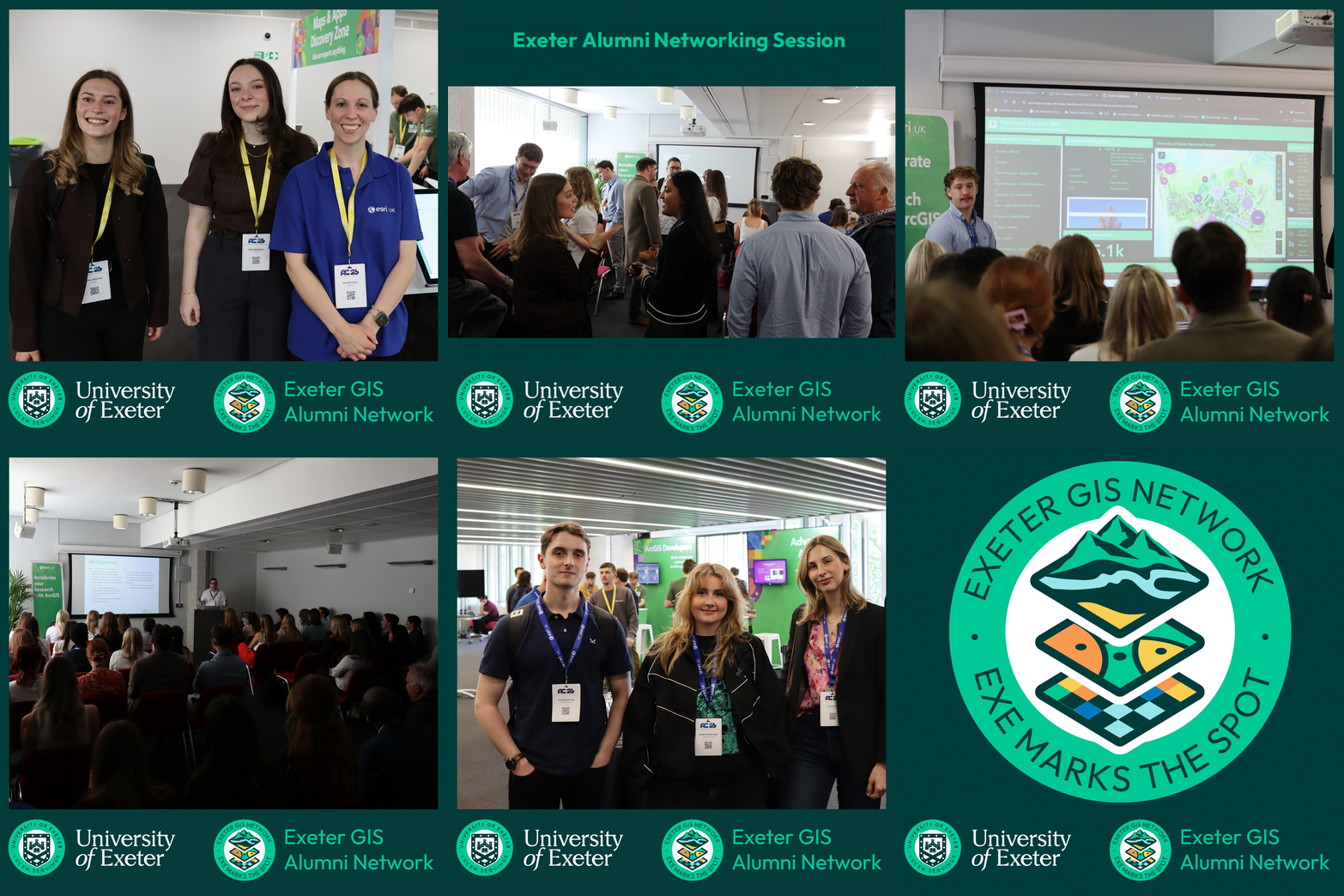
Each year, more than fifty Exeter students and alumni come together at the Esri UK
Annual Conference. Rather than treating the conference as an extracurricular
networking opportunity, it is embedded within the curriculum. Students present their
work, engage with industry professionals, receive feedback from alumni and begin
developing professional networks before they graduate. Rather than simulating
employability, they experience professional practice first-hand.
Using Alumni to Inform Curriculum Design
The greatest strength of The Alumni Curriculum Partnership Framework extends
beyond employability. It creates a continuous pedagogic feedback loop that helps
ensure teaching evolves alongside professional practice.
For educators, keeping pace with rapid developments in cloud-native GIS, automation,
artificial intelligence and spatial data science is an ongoing challenge. At the same
time, employers increasingly seek graduates who combine technical expertise with
communication, collaboration, ethical decision-making and problem-solving skills.
Our alumni network provides a unique window into these changing expectations.
Graduates working across consultancy, local government, environmental organisations
and the wider geospatial sector return each year to share how they have applied their
university learning in practice. They discuss emerging technologies, changing
workflows, workplace challenges and the skills they developed most rapidly, while also
identifying areas where additional preparation would have supported their transition
into employment.
These conversations, combined with close collaboration with Esri UK professionals, provide invaluable intelligence that directly informs curriculum design. Rather than responding to change retrospectively, I can introduce emerging technologies, authentic learning activities and industry-relevant assessments that anticipate future workforce needs. The curriculum therefore becomes a living reflection of contemporary professional practice.
A Self-Sustaining Learning Community
Perhaps the most distinctive feature of The Alumni Curriculum Partnership
Framework is that it strengthens itself over time.
Students engage with the network at a pivotal point in their transition from university to professional practice. As their careers develop, many return as GIS consultants, analysts, technical specialists and industry leaders, bringing fresh insights into new technologies, professional practice and career development. Each cohort therefore enriches the learning experience for the next.
The result is a self-reinforcing professional ecosystem in which students become
alumni, alumni become mentors, and mentors become partners in curriculum
innovation. Rather than requiring continual rebuilding, the network regenerates itself,
creating an increasingly rich community of practice that supports students, educators,
alumni and employers alike.
Impact Beyond Employability
Students consistently report increased confidence, greater clarity about career
opportunities and a stronger sense of belonging within the geospatial profession. More
importantly, they graduate with established professional networks and a realistic
understanding of workplace expectations before entering employment.
The long-term impact is reflected in the success of Exeter graduates securing highly
competitive roles across Esri UK, Ordnance Survey and the wider geospatial sector.
Employer feedback consistently highlights the strength of Exeter graduates and the
value of combining technical capability with professional confidence developed
through the network.
The benefits extend equally to alumni, who remain connected to a supportive professional community while developing mentoring, leadership and presentation skills. Their continued involvement ensures the network remains dynamic, relevant and professionally current.
Why This Matters Beyond GIS
Although developed within the geospatial sector, The Alumni Curriculum
Collaboration Framework is readily transferable across disciplines. Its core principles
are simple: embed students within authentic professional communities, create
reciprocal relationships with alumni, and use those relationships as an ongoing
source of curriculum enhancement.
Professional conferences become more than networking events; they become learning
environments. Alumni become more than inspirational speakers; they become partners
in educational design. The result is a sustainable framework that simultaneously
strengthens teaching, enhances employability, supports lifelong learning and builds
enduring relationships between universities, graduates and industry.
What began as an employer collaboration has evolved into a pedagogic model in which
alumni are active partners in curriculum enhancement, professional learning and
student success. By positioning alumni at the heart of curriculum development, The
Alumni Curriculum Collaboration Framework demonstrates how universities can
close skills gaps while creating communities that continue to learn from, and invest in,
one another long after graduation.
I’d be delighted to discuss how the model could be adapted within other disciplines. Please get in touch at d.t.mansell@exeter.ac.uk
For more information
This blog post was written by Dr Damien Mansell